
ANMA’s first
reuse project
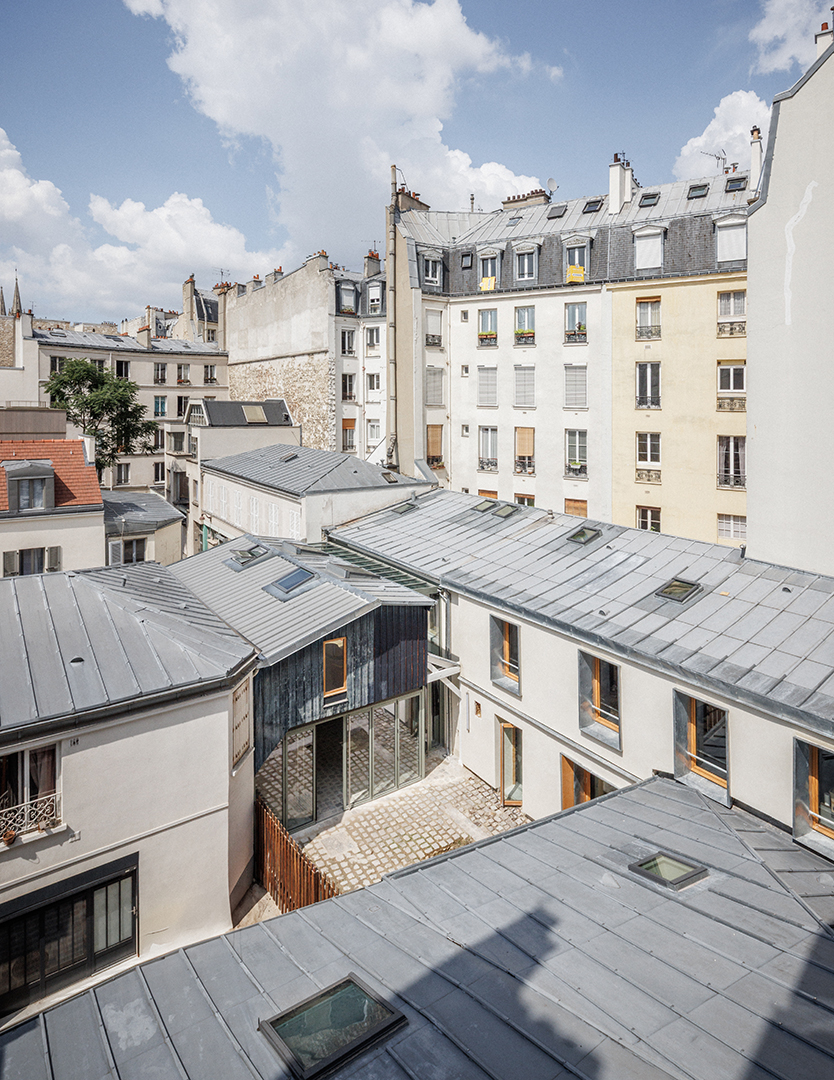
At the end of a cul-de-sac in the 11th arrondissement of Paris, a nugget project for the agency: the transformation and rehabilitation of a former medical center gave birth to the Maison de l’Écologie, the first reuse project for the ANMA agency.
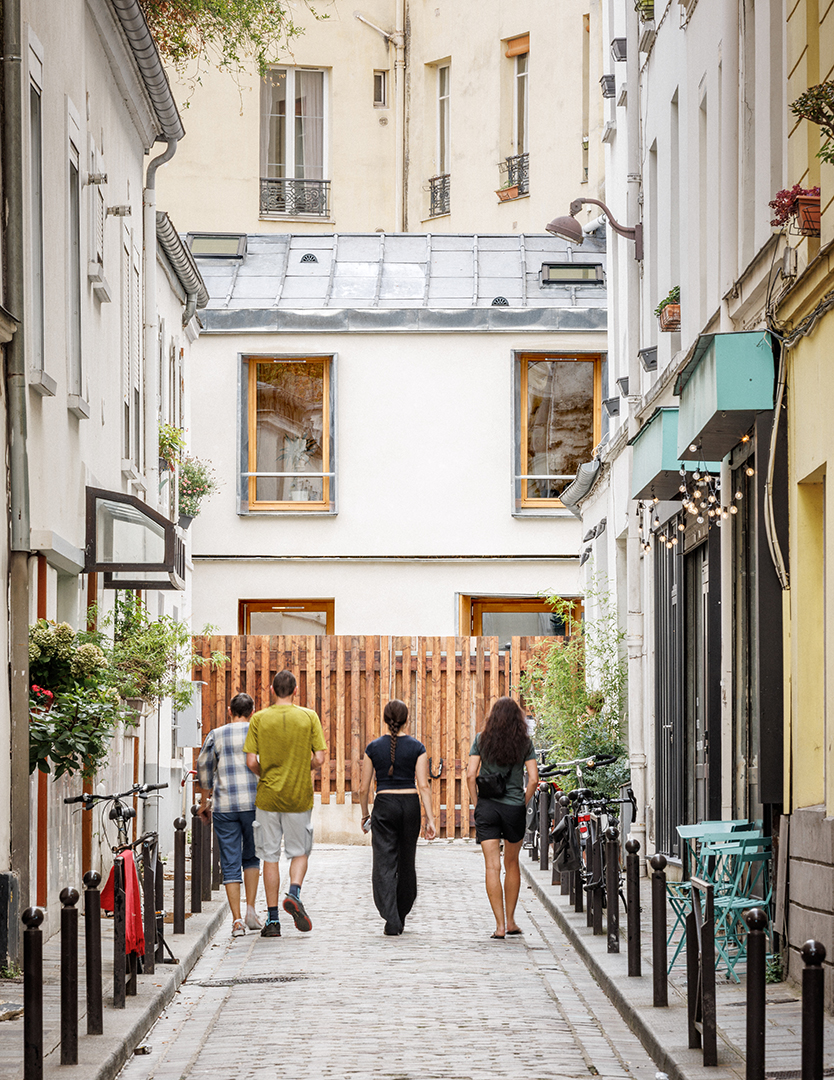
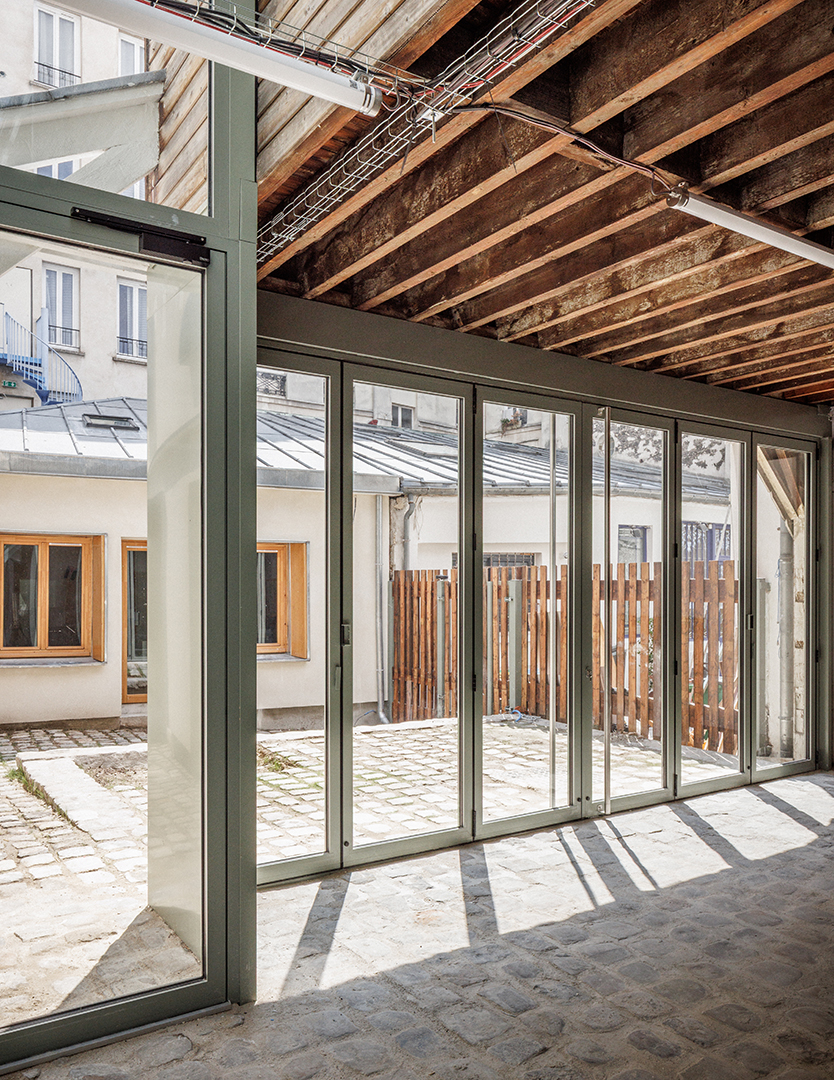
Without altering their structure or envelope, three adjoining buildings are reconnected and redeveloped to create a new office space. Set around a cool, paved courtyard with semi-permeable flooring, generous vegetation and a newly-planted tree, it features a wooden hut perched above the courtyard, and an enclosed winter garden where light streams in through large bay windows.
reduce carbon footprint to a minimum
This prototype project is the result of a collective commitment by the project management team to its client, involving companies from the social economy in order to achieve ambitious objectives: preserving the existing structure as much as possible, reusing materials, promoting a replicable environmental approach, allowing the mutability of spaces and promoting social integration.
Floors, partitions, insulation, finishes… from the structure to the finishing touches, every detail is designed and the constructive solutions are implemented in such a way as to reduce the project’s carbon impact as much as possible: reuse of available resources, no artificialisation of the soil, complete storage on site, extensive use of prefabrication, reversibility of assemblies, majority choice of bio-sourced materials.
from rubble to new cladding
This ambition implies a specific phasing: the worksite starts during the design phase in order to quantify the materials and rubble that can be recycled. Precise sourcing and monitoring of materials by the agency enabled us to achieve a reuse rate of over 50% of the site’s rubble, while the remaining material was sent to the local Réavie reuse platform.
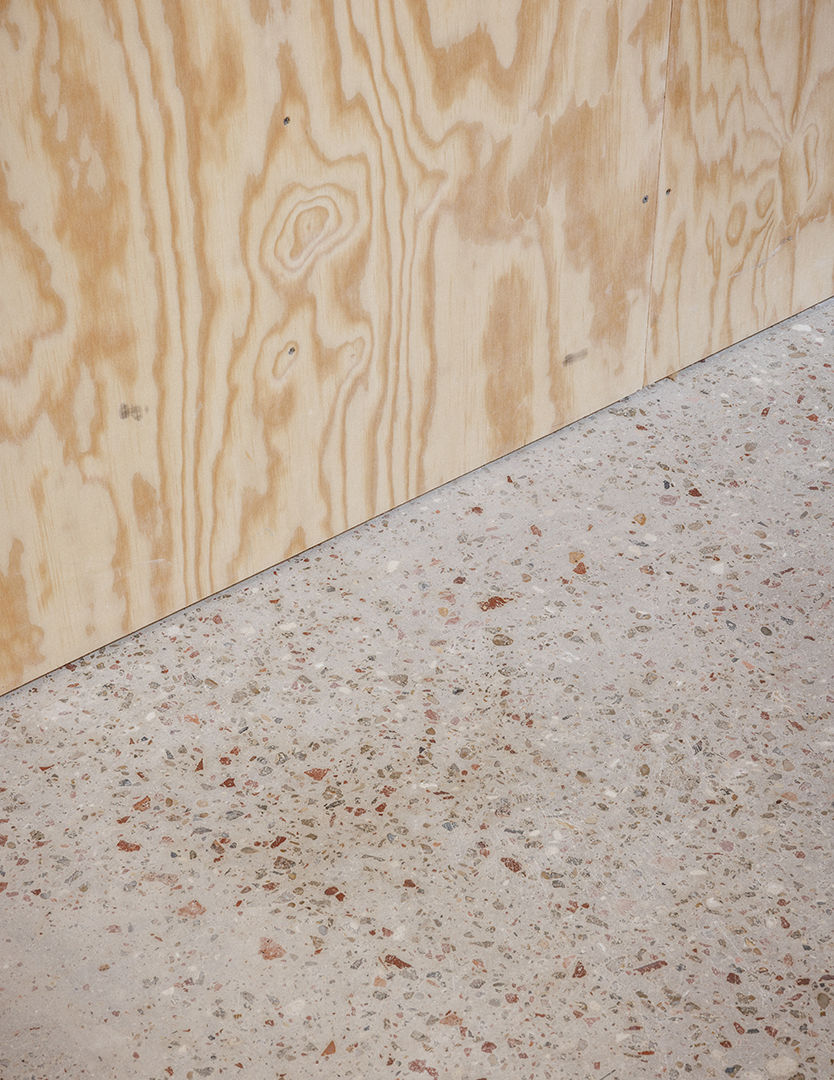
Ten tons of rubble are sorted, stored and crushed on site before being transformed into new cladding, without washing to avoid using large volumes of water for purely aesthetic purposes. The medical practice’s cinder blocks, bricks and old plaster linings are thus transformed into a plaster concrete applied to the floor and, for the walls, into a mortar with plaster-like qualities, whose final aesthetic, not very predictable, is only revealed by the final sanding.
walls and floors
with stories to tell
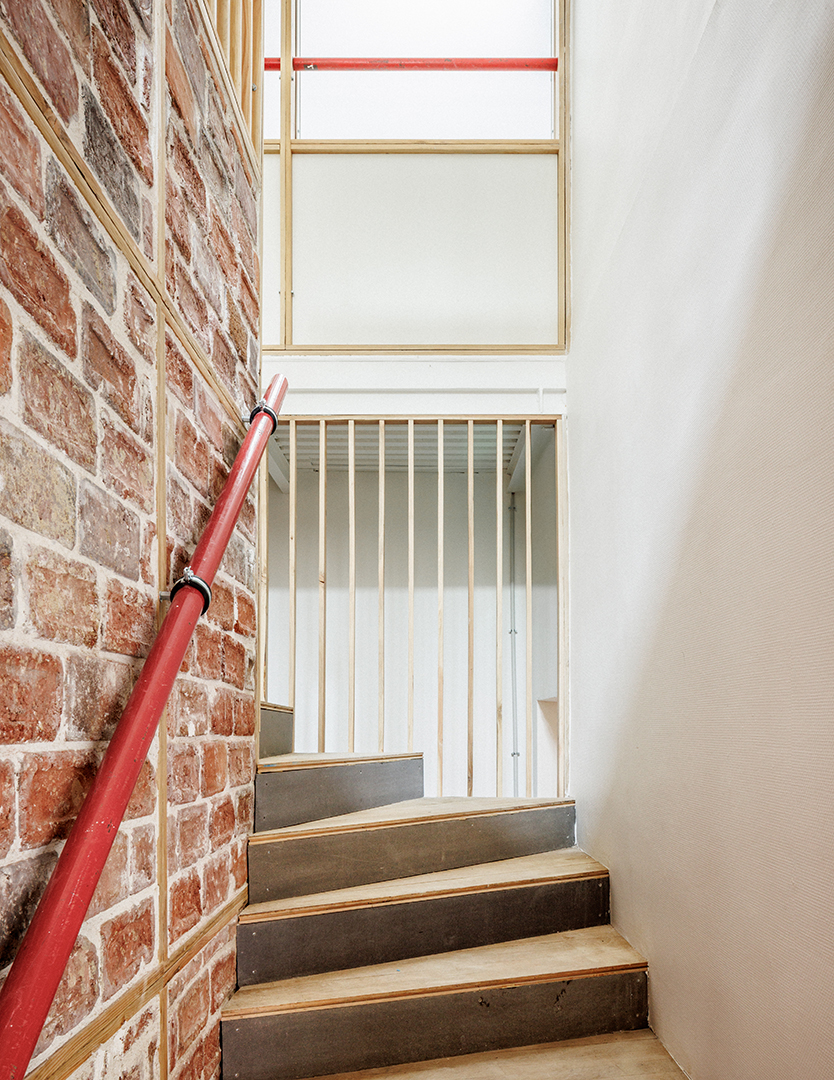
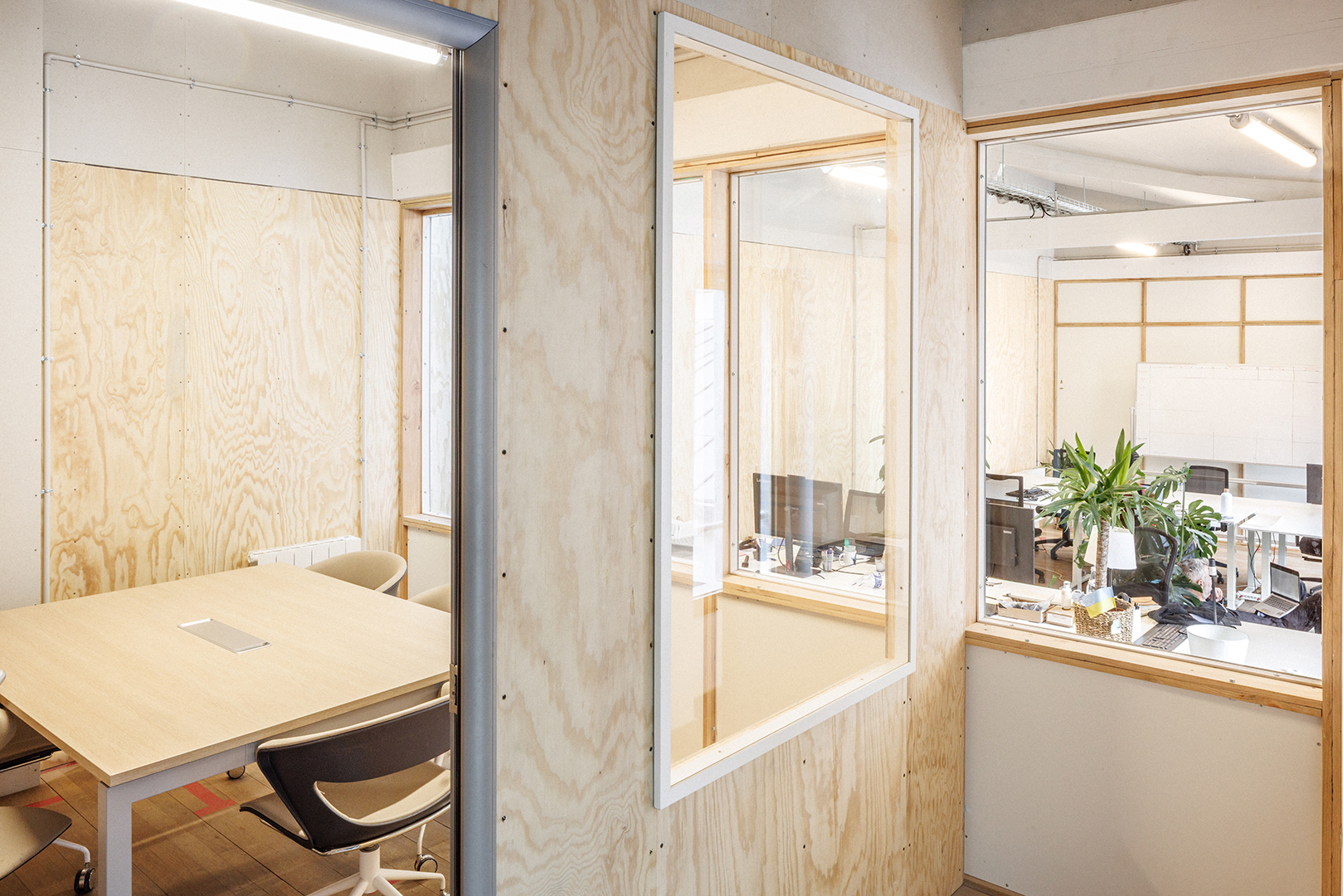
Like the floors, the project’s walls are 100% reusable, from their wooden structure to the door handles. The dividers are reversible, prefabricated by Réavie and assembled on site. The brick partitions for the wet rooms are assembled on site by an integration project. The exterior walls are lined, insulated with wood fiber and clad with exposed Fermacell panels. And the facades, for the second time only in France, are insulated with half-bales of straw split directly into the existing stones and finished with a plaster coating, without lime.
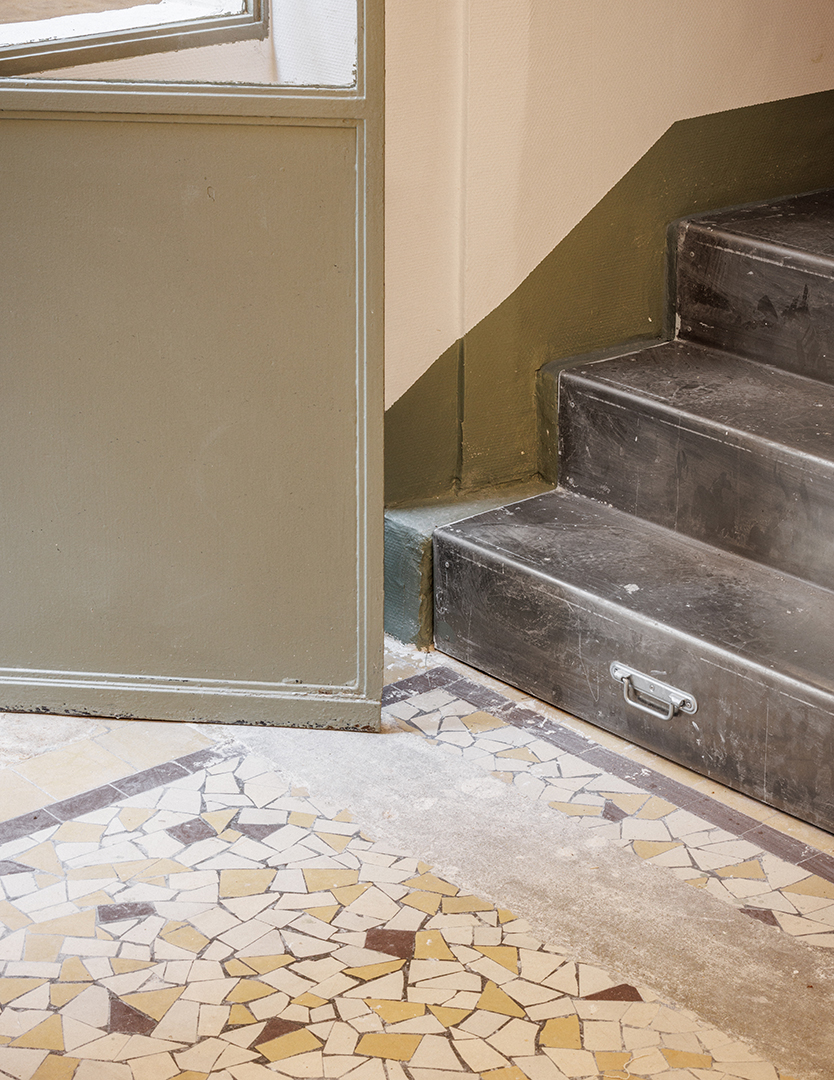
Outside and inside, a fence, built during a participatory workcamp, and a staircase made from the wood of the frame and parquet flooring removed from the existing building. Upstairs, a new floor, made from the slats of a sports parquet floor from a former squash court in the Paris region. Lower down, the existing tiles have been preserved, and all sanitaryware has been reused, either on site or from the Réavie platform. In the courtyard, the paving stones were dismantled, selected, brushed and re-laid.
adapted method
precision drawing
The working method induced by reuse is expressed by constant adjustment: what is designed is not definitive until the resource is confirmed. Unlike the current prescription model, this approach guarantees neither the quantity nor the uniformity of materials. Constructive details are therefore implemented according to the material suitability of local resources.
The Maison de l’Écologie is a manifesto for alternative, meticulous construction: resource-saving, energy-efficient. Bordering on the passive, it reveals the raw texture of materials and engineering where nothing is camouflaged, neither networks, nor screws, nor the uncontrolled roughness of the material.
PROJECT TEAM
DESIGN TEAM
Architect, landscaper, re-employment: ANMA
Structure: Kephren
Fluids, thermal: Alto Step
Control office: AléaTec
Transfer of gypsum concrete experience: Ciguë
STUDIES, CONSTRUCTION
Séverine SAVIGNY
COMPANIES
Company management: Rehas
Gypsum concrete, plastering: Alter-Bâtir
Reuse platform, professional integration:
Association Réavie
Participative worksite: Collectif Lokal
Carpenter, roofer: Schartier
Plastering: Collectif Paille
Others: Aeris, Bati Fenêtre, Fabrix, Horizon, HSM2 décoration, IDF Carrelage, Mazdem, Newsol, Leblanc, Sopribat, PCFG, MS Vexin and Ascier.
TECHNICAL SHEET
STATUS Delivered
CONTRACTORS Les Écologistes
ADVISOR Atelier Thomas Zhu Architectes
CALENDAR
Design start: April 2024
Site start: November 2024
Acceptance: July 2025
AREA 371 m² SU
COST 920.5 K€ HT
PHOTOGRAPHY 11h45
AWARD Winner of the Climax 2025 call for projects
from AMC magazine
SEE MORE
Paris, Ministry of Defense
Paris, Halle aux Farines
Villeneuve d’Ascq, Microtopie